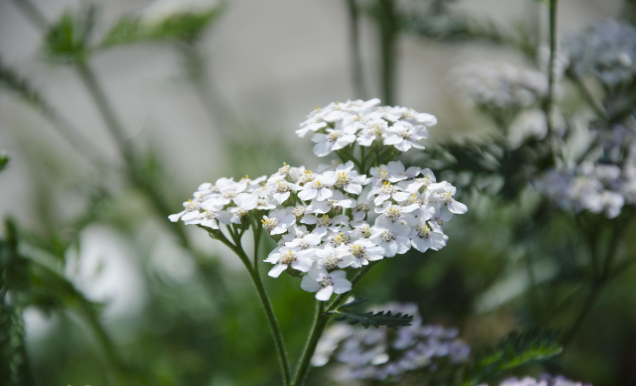
COMMON NAME: YARROW, woundwort, staunch weed, nosebleed, woundwort, carpenter’s weed
LATIN NAME: Achillea millefolium
FAMILY: Asteraceae
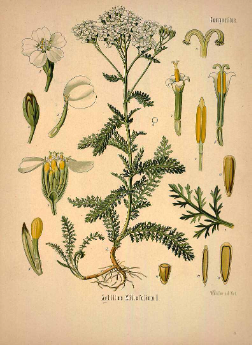
PARTS USED: Aerial parts
REGIONS: regions of the Northern Hemisphere in North America, Europe, and Asia
SYSTEM AFFECTED: digestive, circulatory
HARVESTING GUIDELINES: Harvest yarrow flowers and leaves when the plant is in full bloom. Harvest in the morning after the dew dries and before the sun’s heat evaporates the lighter essential oils
PLANT CONSTITUENTS: volatile oils, sesquiterpene, lactones, flavonoids, tannins, phenolic acids, alkaloids, coumarins
ACTIONS: Anti-bacterial, Anti-rheumatic, Antiseptic, Anti-inflammatory, Analgesic, Astringent, Digestive, Emmenagogue, Febrifuge, Hypotensive, Nervine, Vulnerary, Styptic
TASTE: Bitter
ENERGY: Cooling, Drying
BENEFITS OF YARROW:
Yarrow is widely used as a first-line herb for both external and internal bleeding. It promotes blood clotting and helps close wounds, making it useful for cuts, sores, rashes, hemorrhoids, and menorrhagia (excessive menstrual bleeding). Applied topically or taken internally, yarrow can reduce bleeding and accelerate healing.
Yarrow also reduces swelling, particularly from insect bites and poisonous stings, by calming inflammation and soothing irritated tissue. Its antimicrobial properties and mild diuretic effect can support urinary tract health. Volatile oils with antimicrobial activity are excreted via the kidneys, where they may help cleanse and tone the urinary tract, aiding recovery from lower urinary tract infections.
For respiratory conditions, yarrow has anti-catarrhal and antiviral actions that may help loosen and eliminate mucus from the sinuses and upper airways, making it useful for colds and flu. It can also act as a diaphoretic (promoting sweating), which some traditional practices use to help break fevers.
Digestively, yarrow stimulates appetite, improves nutrient absorption, and tones digestive organs. Its antispasmodic action relaxes gastrointestinal smooth muscle, easing cramps, bloating, and other digestive discomforts.
Cold yarrow tea: brewing yarrow as a cool infusion (cold tea) preserves volatile compounds and can be sipped for digestive relief, urinary support, mild antimicrobial benefits, and respiratory symptom relief. For topical use, cooled yarrow infusion or compresses can be applied to wounds, bites, or inflamed areas.
 USES OF YARROW:
Tincture Dose: 2–4 mL of a 1:5 (25%) tincture, three times daily.
Topical: systemic circulatory support, reduce bleeding or bruising, topical first-aid when diluted or mixed into a carrier. Take with food if it upsets your stomach. Consult a provider if pregnant, breastfeeding, taking anticoagulants, or before prolonged use.
Infusion (tea)
Standard dose: 1–2 teaspoons of dried aerial parts per 8 fl oz (about 240 mL) boiling water, three times daily. Steep 10–15 minutes and strain.
For fevers: 1–2 teaspoons of dried aerial parts per cup, taken hourly while feverish (short-term use only).
CONTRADICTIONS: Dose Carefully—herbal potency varies. Avoid use in pregnancy (can stimulate uterine activity) and consult a healthcare provider if you have severe bleeding, infection, or are taking medications.
DOSAGES: Tincture: 2-4 mL (1:5, 25%) 3x/day.
Infusion: 1-2 tsp dried aerial parts in 8 fl oz boiling water 3x/day. During fevers, 1-2 tsp dried aerial parts hourly