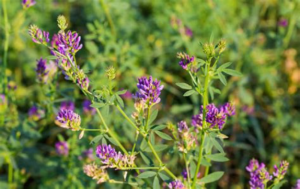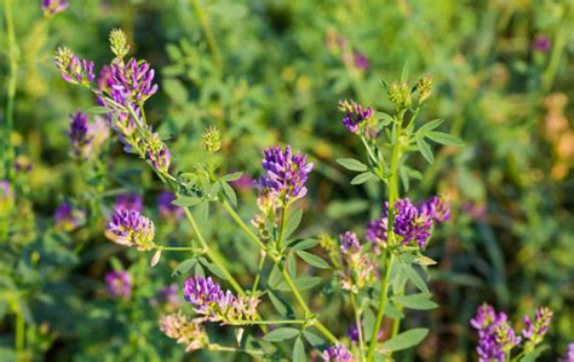
COMMON NAME: ALFALFA
LATIN NAME: Medicago sativa
FAMILY: Papilionaceae
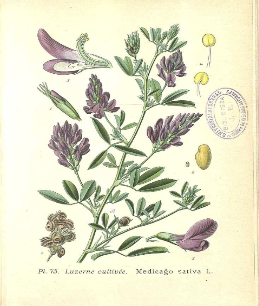
PARTS USED: Leaves, flowers, seeds, and sprouts.
REGIONS: Southeast Asia and Southeast Europe
SYSTEM AFFECTED: digestive, structural, circulatory
HARVESTING GUIDELINES: Harvest alfalfa leaves just as the plant
begins to bloom. Cut back the plant within 3 inches of the ground, using the
fresh leaves or hanging the herb in bundles to dry. Multiple harvests are possible
in a single season. Promptly process alfalfa, since it begins to break down
quickly when left in direct sunlight. Under optimal conditions, it takes 2 days to
dry alfalfa leaves
PLANT CONSTITUENTS: Bitter, tonic, Steroidal saponins, sterols, coumarins, flavonoids, alkaloids, proteins, phytoestrogens (isoflavones, coumestrol, apigenin, luteolin and quercetin), vitamins (B, C, E, and K), and minerals (calcium, iron, magnesium, phosphorous, and potassium)
ACTIONS: Anti-rheumatic, Anodyne, Antioxidant, Anti-inflammatory, Diuretic, Depurative, Emmenagogue, Galactagogue, Phytoestrogen
TASTE: Salty, Bitter
ENERGY: Cooling
BENEFITS OF ALFALFA:
Alfalfa is commonly used as a bitter tonic and blood-purifying herb. As a mild digestive aid, it is often combined with mint in teas to soothe the gastrointestinal tract. This digestive benefit is attributed in part to betaine, an enzyme-related compound present in alfalfa that supports digestion and healthy gastric function.
– Macronutrients: Alfalfa leaf is a concentrated source of protein for a leafy plant and supplies significant dietary fiber.
– Vitamins: It contains notable amounts of fat-soluble vitamins A, D, E, and K, plus provitamin A compounds such as carotenoids.
– Minerals and trace elements: The plant’s deep root system enables uptake of a broad spectrum of soil minerals, making alfalfa relatively rich in trace minerals.
– Chlorophyll and carotene: Alfalfa extract provides chlorophyll and carotene; chlorophyll is often cited for its antioxidant qualities in the bloodstream.
– Amino acids: The leaves include the eight essential amino acids required in the diet.
– Other phytochemicals: Alfalfa contains a variety of phytonutrients, some of which have estrogenic (phytoestrogen) activity that may affect hormonal balance.
– Digestive support: Used traditionally to ease digestion and reduce bloating; teas or tinctures combining alfalfa and mint are popular for this purpose.
– Nutritional tonic: Employed as a nourishing tonic to support general health and replenish nutrients, particularly when diet is inadequate.
– Detoxifying and blood-supportive roles: Historically described as a “blood purifier,” alfalfa has been used to support liver and circulatory health in traditional systems.
– Women’s health: Its phytoestrogenic constituents have attracted interest for potential supportive roles in menopausal or menstrual symptom management; however, responses vary and effects are generally mild.
CONCLUSION:
Suggestions for use and safety: use alfalfa primarily as a dietary supplement or herbal tonic rather than a standalone therapy; consult a healthcare provider before use if pregnant, nursing, taking medications, or having autoimmune or hormone-sensitive conditions; start with small amounts to assess tolerance.
 USES OF ALFALFA:
– Tea: Brewed leaves combined with mint for digestive comfort.
– Extracts/tinctures: Concentrated options for shorter-term, measured use.
– Dried leaf or powder: Added to blends or supplements for nutritional support.
– Sprouts: Culinary use provides fresh nutrients but follow food-safety guidance to reduce contamination risk.
DOSAGES: Capsules: 3-4 (370 mg) capsules 3x/day Tincture: 15-30 drops 4x/day. Infusion: 1-2 tsp dried herb in 8 oz boiling water 3x/day