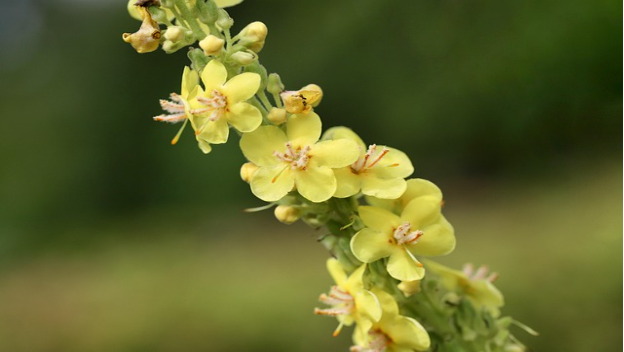
COMMON NAME: MULLEIN, Flannel Leaf, Mullein Dock, Aaron’s Rod
LATIN NAME: Verbascum thapsus
FAMILY: Scrophulariaceae
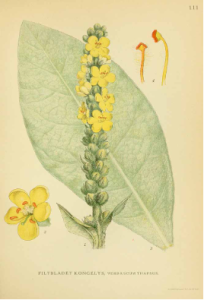
PARTS USED: Leaves, flowers, roots
REGIONS: Anywhere
SYSTEM AFFECTED: respiratory, digestive
HARVESTING GUIDELINES: The leaves of both the first year and second year plant may be harvested before the flower stalk shoots up. Flowers is harvested in the summer. The root is harvested from first year plants.
PLANT CONSTITUENTS: ascorbic-acid, coumarin, crocetin hesperidin magnesium, verbascoside
ACTIONS: Expectorant, Anti-inflammatory, Antispasmodic, Lung tonic
TASTE: Bitter
ENERGY: Cooling, Moistening
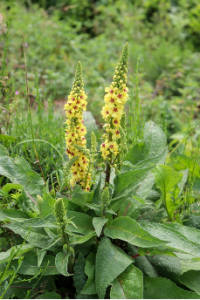 USES: Mullein (Verbascum spp.) has a long history in traditional medicine for respiratory, skin, ear, and some musculoskeletal complaints. Its flowers and leaves contain mucilage, which forms a soothing coating on mucous membranes. This mucilaginous effect can ease throat and airway irritation and may help loosen mucus, which explains widespread use for colds, coughs, bronchitis, asthma, and croup. Preparations include infusions, syrups, macerations, and topical oils or salves, often combined with honey or other plants.
Topically, mullein-based salves and oils have been used for inflammatory skin disorders, minor wounds, and ulcers; anti-inflammatory and soothing actions reported in folk and some experimental sources support these uses. Ear oil made from mullein flowers is a common traditional remedy for earaches.
CONTRADICTIONS: No known side effects. If using mullein, choose reputable preparations, follow dosing guidance, and watch for allergic reactions. Do not replace prescribed treatments for serious respiratory, cardiovascular, or orthopedic conditions without consulting a healthcare professional. Consider mullein as a complementary, symptomatic option rather than a proven cure for severe disease.
DOSAGES: Tincture: 2.5-5 mL of 1:5 in 40% three times/day Tea: 2 teaspoons dried leaf or flower steeped for 15 minutes in one cup boiling water, three times/day
.