COMMON NAME: LOBELIA, Indian-Tobacco. Pukeweed. Asthma Weed.
LATIN NAME: Lobelia inflata L.
FAMILY: Campanulaceae
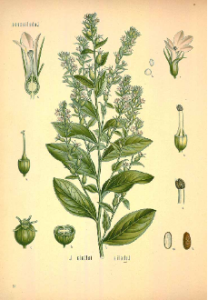
PARTS USED: Aerial portions, seeds, root
REGIONS: Canada and to the eastern as well as to some north-central areas of the midwestern United States
SYSTEM AFFECTED: respiratory, nervous, digestive, circulatory
HARVESTING GUIDELINES: Harvest when the fruits lower on the plant are both ripe and dried out (Barker, 2001). Because lobelia is potentially at risk, it may be ideally harvested after lower seedpods have matured and released their seeds (United Plant Savers, 2018). Otherwise, the entire herb may be picked in seed stage and dried for use in infusion or directly used fresh in tincture (Wood, 2009).
PLANT CONSTITUENTS: alkaloids (lobeline, iso-lobinine, lobelanidine, lobinaline), a bitter glycoside (lobelacrin), a pungent volatile oil (labelianin), resin, gum, fats, chelidonic acid
ACTIONS: Alterative, Analgesic, Anti-inflammatory, Astringent, Digestive, Diuretic, Diaphoretic, emetic, Expectorant, Febrifuge, Nervine, Stimulant, Vasodilator
TASTE: pungent, acrid, bitter
ENERGY: Warming, Cooling
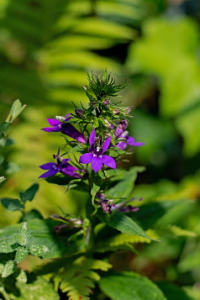 USES: Lobelia is a potent herb used as a relaxant for pain and as a respiratory stimulant and expectorant in bronchitis and asthma. Its primary alkaloid, lobeline, has nicotine-like effects and may help with tobacco withdrawal. Internally, lobelia has traditionally been taken in small amounts or briefly as part of compound formulas. Externally, a decoction can be applied to minor skin irritations, sprains, and bruises.
CONTRADICTIONS: Use short-term and in low doses; avoid prolonged or large single doses.
- Children (especially very young), frail elderly individuals, and those with low vitality should avoid lobelia.
- Idiosyncratic or excessive doses may cause diarrhea, nausea, increased salivation, hearing or vision disturbances, weakness, confusion, or general debility.
- Avoid large lobelia doses close to the time of taking central nervous system stimulants or sedatives, as interactions are possible.
- Because lobeline acts similarly to nicotine, caution is warranted for people with cardiovascular disease, hypertension, or sensitivity to nicotinic agents
Suggestions for safer use:
- Prefer short courses and small doses within professionally formulated blends rather than high-dose single-herb preparations.
- Consult a qualified healthcare provider before using lobelia if you are pregnant, breastfeeding, taking prescription medications, or have chronic medical conditions.
- Discontinue use and seek medical help if signs of overdose or severe adverse reactions occur.
DOSAGES: Tincture: 5-15 drops, 4x a day, 1-2 drops and discontinue when salivation or nausea appears; 2-4 fluid drachms or 1-40 drops according to use in a bit of water
Infusion: 6-15 grams