
COMMON NAME: ELECAMPANE, Wild sunflower, Horseheal, Yellow Starwort
LATIN NAME: Inula helenium
FAMILY: Asteraceae
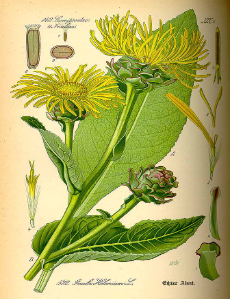
PARTS USED: Root; flowers and leaves
REGIONS: Temperate regions of Europe, western Asia, and eastern North America
SYSTEM AFFECTED: digestive, respiratory
HARVESTING GUIDELINES: The roots are harvested in autumn of the second year of growth
PLANT CONSTITUENTS: The active constituents in elecampane include essential oils (camphor; sesquiterpene lactones alantolactone helenalin and isoalantolactone), polysaccharides (primarily inulin, and up to 44%), alkaloids, bitters, sterols, resin, sodium, calcium, and magnesium
ACTIONS: Antibacterial, Alterative, Antiparasite, Antitussive, Antimicrobial, Astringent, Cholagogue, Carminative, Diuretic, Expectorant, Vermifuge
TASTE: Bitter (mild), Sweet, Pungent
ENERGY: Warming, Grounding, Drying
 USES:Elecampane (Inula helenium) is traditionally used as an expectorant to relieve respiratory conditions such as asthma, bronchitis, congestion, and persistent coughs. Its root preparations—teas, tinctures, or extracts—help loosen and expel mucus while soothing irritated respiratory tissues and reducing inflammation from repeated coughing. Elecampane also has been employed as an anthelmintic to help expel intestinal parasites and worms. As a bitter tonic, it stimulates and tones the digestive system, supporting digestion and appetite. Additionally, elecampane has been used to promote menstruation and is thought to influence hormone balance, potentially alleviating menstrual disorders and some premenstrual syndrome (PMS) symptoms associated with estrogen and progesterone deficiency. Traditional uses also include mild analgesic effects for relief of aches and pain.
Suggestions for improvement:
- Cite clinical evidence and safety: clarify which claims are supported by clinical trials versus traditional or in vitro data.
- Specify preparations and dosages: recommend forms (tea, tincture, capsule) and typical dosing ranges or direct readers to consult a practitioner.
- Add precautions and interactions: note contraindications (e.g., pregnancy, breastfeeding), possible allergic reactions, and interactions with medications.
CONTRADICTIONS: Elecampane may cause allergic reactions for people with allergies to the Asteraceae family. Large amounts of the herb may cause vomiting, diarrhea, cramps, and symptoms of paralysis Include side effects and monitoring: mention potential gastrointestinal irritation and the need to stop use if adverse reactions occur.
Recommend consulting a healthcare provider: advise professional guidance for treating respiratory disease, parasitic infections, hormonal disorders, or chronic pain.
DOSAGES: 1-2 ml tincture (1:5 in 40%) 3x per day; 1 teaspoons shredded root per cup boiling water, steeped for 8-10 hours, reheated and taken three times per day