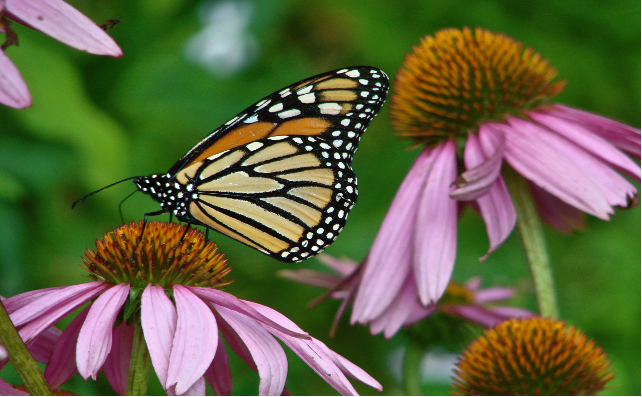
COMMON NAME: ECHINACEA, coneflower, purple coneflower, comb flower, Missouri snakeroot
LATIN NAME: Echinacea angustifolia
FAMILY: Asteraceae
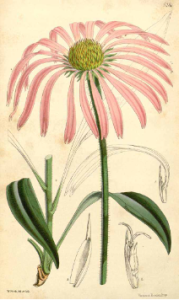
PARTS USED: Roots, flower heads, leaves
REGIONS: North America, Europe
SYSTEM AFFECTED: immune, respiratory, digestive
HARVESTING GUIDELINES: Roots are generally best in the fall after the first frost. Leaves and flowers can be harvested in summer when flowers are in full bloom.
PLANT CONSTITUENTS: Polysaccharides, glycoproteins, echinacoside, echinacin, polyacetylenes, betaine, caffeic acid glycosides, inulin, sesquiterpene esters, alkamides, volatile oils, flavonoids
ACTIONS: Anti-inflammatory, Antibacterial, AntiViral, Depurative, emetic, Immunostimulant, Alterative, Vasodilator, bitter, Analgesic
TASTE: Acrid
ENERGY: Cooling
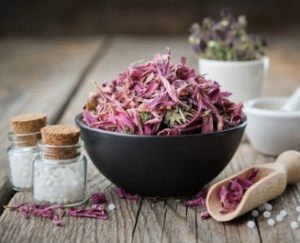 USES: Echinacea can help support the immune system and is most effective when taken at the first signs of a cold, sinus infection, gum inflammation, or other early infections. When started promptly, many people find it shortens symptom severity and duration. Echinacea also produces a mild numbing sensation that can relieve pain from cold sores and may offer some protection against herpes simplex viruses. In addition, certain echinacea preparations show activity against Candida albicans, the fungus responsible for most yeast infections.
- Topical applications provide quick, localized relief. A few drops of echinacea tincture or a skin wash prepared from fresh echinacea flowers can reduce itching and soothe the sting of insect bites and hives. Echinacea’s anti-inflammatory properties may also help calm irritated skin when applied externally.
- Forms and usage: echinacea is available as teas, tinctures, tablets, capsules, and topical washes. For acute respiratory symptoms or bite-related irritation, liquid tinctures or topical washes allow faster local effects. Capsules and teas are commonly used for general immune support. Follow product-specific dosing and consult a healthcare professional for guidance, especially for children, pregnant or nursing people, or those with autoimmune conditions or allergies to plants in the daisy family.
CONTRADICTIONS: An allergic reaction may be possible in people with allergies to daisy family plants. Safety note: echinacea is generally well tolerated, but allergic reactions and gastrointestinal upset can occur. If symptoms worsen or persist, seek medical attention.
DOSAGES: Juice: 1 – 3 teaspoons of the fresh juice of aerial parts, 3 times/day.**
Tincture: 1 to 4 mL of a 1:5 in 40% 3x/day.* Buhner’s recommendations for throat infections and onset of cold and flu: 30 drops an hour of a 1:5 in 70%.**
Topical: finely grind dried root and sprinkle on infected wounds or mix with water to form a paste and place on area.