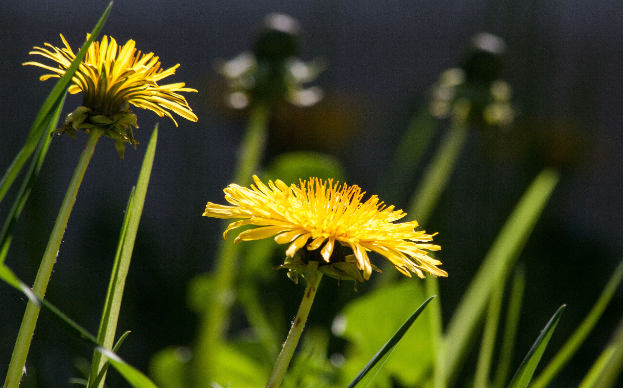
COMMON NAME: DANDELION, blowball, cankerwort, Irish daisy, monk’s head, priest’s crown, swine snout, wild endive, witch gowan, and yellow gowan
LATIN NAME: Taraxacum officinale
FAMILY: Asteraceae
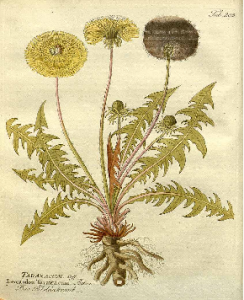
PARTS USED: Entire plant
REGIONS: North America, South America, Europe, southern Africa, New Zealand, Australia, and India.
SYSTEM AFFECTED: digestive, glandular, circulatory
HARVESTING GUIDELINES: Leaf: springtime leaves are often preferred because they are less bitter. Those seeking the beneficial bitter flavor can harvest all season. Simply cut the entire crown at ground level. Root: Harvest the taproot between in the spring for bitter roots and in the fall for sweeter roots, Flower: Pop off the open yellow flower, leaving the green sepal behind if you would like to avoid their bitter flavor. You can harvest the whole plant.
PLANT CONSTITUENTS: Vitamins A and B. Leaf: calcium, potassium, iron, carotenoids, coumarins. Root: potassium, calcium, phenolic acids, taraxocoside, inulin.
ACTIONS: Diuretic, Cholagogue, Bitter, Tonic, Hepatic, Alterative, Aperient, Nutritive
TASTE: Bitter, Slightly sweet, Slightly salty – leaf
ENERGY: Cooling, Pungent, Drying
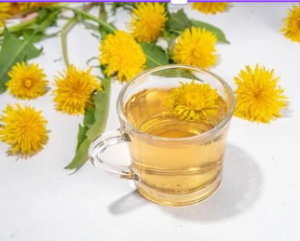 USES: Dandelion root is used as a mild laxative, a restorative tonic, and a natural diuretic. Traditionally, it has been employed to support liver and spleen health and to relieve heartburn, rheumatism, gout, and eczema. Rich in minerals and electrolytes— including sodium and potassium—dandelion offers a broadly balanced mineral profile. Its bitter constituents stimulate appetite and enhance digestion by increasing secretion of bile, gastric juices, and pancreatic enzymes. As a cholagogue/choleretic, dandelion root promotes bile production and flow from the liver and gallbladder, improving fat digestion and absorption.
By supporting liver detoxification pathways, dandelion may aid the elimination of excess hormones, including androgens implicated in acne. Its antimicrobial properties can help reduce unwanted skin bacteria. Dandelion’s digestive and hepatic effects also support metabolic function and may indirectly benefit female reproductive health by helping to balance hormone production.
Suggested improvements:
Cite clinical or peer-reviewed sources for specific claims (e.g., effects on androgen levels, acne, and hormone balance).
Clarify dosage, preparation, and duration for each use (tea, tincture, roasted root coffee, or extract) to guide safe use.
CONTRADICTIONS: In general, dandelion is a safe tonic herb. Dandelion is in the Asteraceae family, and may rarely cause reactions in people very sensitive to other asters (ragweed, etc). Those with gallbladder or kidney issues should ask their doctor before taking dandelion. Those on blood thinners or diuretics should avoid dandelion. Dandelion is contraindicated in the case of acute gastric inflammation as it stimulates stomach acid
Note contraindications and interactions (e.g., with diuretics, lithium, anticoagulants) and allergy considerations.
Recommend consulting a healthcare provider for pregnancy, breastfeeding, or existing liver/kidney conditions.
Distinguish between traditional uses and evidence-based outcomes to avoid overstating benefits.
DOSAGES: Root tincture: 2-5 mL 3x/day (1:5 in 60%). Root decoction: 2-3 teaspoons simmered in water for 10-15 minutes 3x/day Leaf tincture: 5-10 mL 3x/day (1:5 in 50%). Leaf infusion: 1-2 teaspoons dried leaf infused in 1 cup hot water for 15 minutes, 3x/day. Fresh leaves can also be eaten steamed or raw.