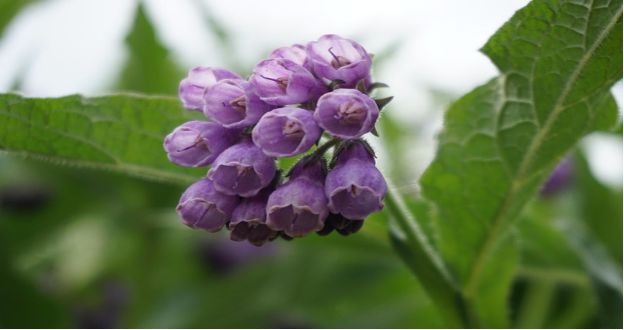
COMMON NAME: COMFREY knitbone, woundwort, knitback, blackwort, bruisewort, slippery root, boneset, and gum plant
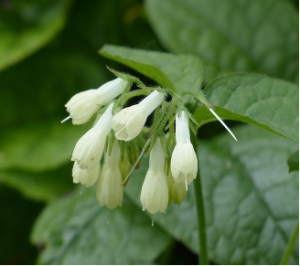
LATIN NAME: Symphytum officinale
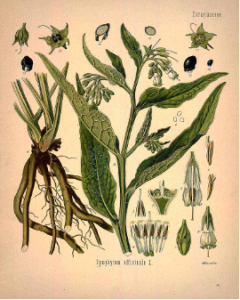
FAMILY: Boraginaceae
PARTS USED: Leaves and root
REGIONS: Europe and temperate Asia, now worldwide
SYSTEM AFFECTED: digestive, liver
HARVESTING GUIDELINES: Harvest comfrey when it reaches 12 to 18 inches tall, but before it blooms. Harvest the root just as the plant wakes in the spring.
PLANT CONSTITUENTS: allantoin, rosmarinic acid, mucilage, tannin, steroidal saponins, inulin, pyrrolizidine alkaloids, gum, carotene, glycosides, vitamin B-12, protein, and zinc
ACTIONS: Astringent, Anti-inflammatory, Hemostatic, Antiseptic, Demulcent, Emollient, Vulnerary
TASTE: Bitter (mild), slightly sweet, Astringent
ENERGY: Cooling, Moistening, Soothing, demulcent
 USES: Comfrey has a long history of medicinal use, primarily applied externally until Western herbalists began exploring internal uses in later centuries. In the 1800s it was commonly used as a poultice or salve for bone “knitting” and fractures, and to treat cuts, burns, skin ulcers, varicose veins, bruises, sores, and bites. Topical comfrey preparations were also used for inflammatory conditions such as rheumatism and for relieving pain and swelling.
As a decoction, comfrey was gargled or used as a mouthwash to soothe throat infections and bleeding gums. Traditional practice extended to respiratory complaints—pulmonic preparations were employed for bronchitis and related coughs. Internally, historical uses included treatment of gastric and duodenal ulcers and other digestive complaints, though internal administration became more controversial as safety concerns emerged.
Typical applications from traditional practice:
- Poultices: fresh or heated leaves applied to fractures, sprains, bruises, and localized wounds to reduce pain and support tissue repair.
- Salves and ointments: concentrated topical preparations for cuts, burns, ulcers, varicose veins, and skin sores.
- Decoctions (mouthwash/gargle): for sore throat, gingival bleeding, and oral inflammation.
- Internal decoctions or infusions: historically used for gastritis, peptic and duodenal ulcers, and some respiratory ailments.
CONTRADICTIONS: Huge debate the safety of comfrey. While the PAs in comfrey have proven toxic. Internal use should be guided by a professional. External use is safer. If the wounds is deep don’t use comfrey since it can heal from the outside by knitting the skin together before the inside is healed. Use plantain and/or calendula first then comfrey when the deep cuts is almost closed.
DOSAGES: Leaf infusion: 5-10g of comfrey steeped for 10 to 15 minutes, Root decoction: 1:10 ratio using fresh root Comfrey preparations should not be used longer than 4 weeks