COMMON NAME: CALIFORNIA POPPY, golden poppy, California golden poppy, flame flower
LATIN NAME: Eschscholzia californica Cham.
FAMILY: Papaveraceae
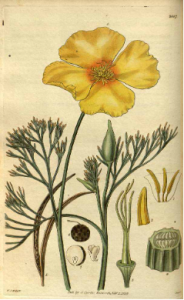
PARTS USED: flowers
REGIONS: California poppy is native to the western United States
SYSTEM AFFECTED: nervous system, urinary, liver
HARVESTING GUIDELINES: Herbalists are divided on whether to use just the aerial parts of California poppy or the whole plant, root and all. Harvest California poppy when it is just beginning to flower. Tincture the plant fresh, or use for infusions. To dry for later use, spread the herb on a screen in a warm, dry, place with good ventilation, out of direct sunlight until the plant is adequately dehydrated
PLANT CONSTITUENTS: Isoquinoline alkaloids, including protopine, californidine, eschscholtzine, allocryptopine, sanguinarine, chelerythrine; flavone glycosides (rutin); and carotenoids
ACTIONS:Analgesic, Anodyne, Anti-inflammatory, Anti-neuralgic, Anti-spasmodic, Anxiolytic, Diaphoretic, Diuretic, Febrifuge, Hypnotic, Nervine, relaxant, Sedative, Soporific
TASTE: Bitter
ENERGY: Cooling
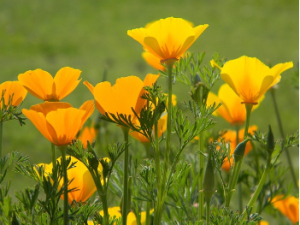 USES:California poppy (Eschscholzia californica) is used for sleep disorders, muscle tension, pain, and anxiety. It’s traditionally employed for a range of mental complaints, including depression, melancholia, nervous agitation, hyperactivity, restlessness, insomnia, neurasthenia, and nervous tension. Because it produces calming, stress‑relieving effects, some practitioners also use it to support people trying to reduce smoking or alcohol use.
The plant’s active constituents are alkaloids such as protopine, californidine, and allocryptopine. These compounds are thought to modulate neurotransmitter systems—particularly the GABA system—by increasing GABA binding at GABA receptors, which promotes relaxation and can reduce anxiety and improve sleep. California poppy is not a narcotic like morphine; although it has structural similarities to opiate compounds, its mechanism of action and clinical effects differ and it is generally considered nonaddictive.
Clinical uses and effects:
- Sleep: may promote relaxation and improve sleep onset and quality.
- Anxiety and stress: can reduce nervous tension and mild-to-moderate anxiety.
- Muscular tension and nerve pain: relaxation and GABAergic activity may help relieve muscle tightness and some types of neuropathic discomfort.
- Addiction support: calming properties may assist with withdrawal-related agitation or cravings as part of a broader treatment plan.
CONTRADICTIONS: could increase the risk of motor impairment or drowsiness when combined with alcohol, Use caution with prescription drugs such as MAO inhibitors and benzodiazepines. avoided by those who are pregnant or trying to become pregnant.
DOSAGES: Tincture: 15-30 drops of the tincture or 3-6mL per day of a 1:2 in 45%). Infusion: Use 1-2 teaspoon dried aerial parts per cup boiling water, infuse 10 min, and take one cup at bedtime to aid with sleep