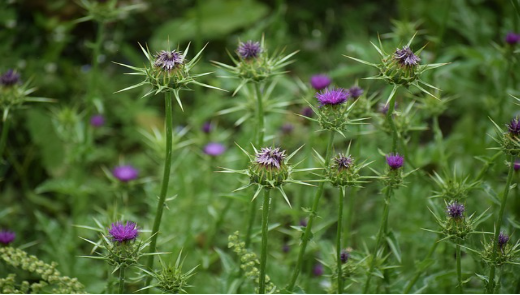
COMMON NAME: MILK THISTLE, Carduus marianus, holy thistle, St. Mary’s thistle, our lady’s thistle, Marian thistle
LATIN NAME: Silybum marianum
FAMILY: Asteraceae
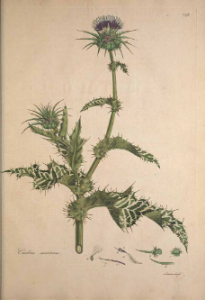
PARTS USED: Seed, leaves, flowers, root
REGIONS: Mediterranean, North America, Europe, Asia, parts of South America and Australia
SYSTEM AFFECTED: digestive, circulatory
HARVESTING GUIDELINES: Milk thistle is an annual herb that germinates in the late summer and early fall warmth. Plants that survive until frost become pressed to the ground over the winter, only to bolt in spring and follow with flowers and seeds
PLANT CONSTITUENTS: Flavolignans (including isosilybinin, silybinin, silychristin, and silydianin, which together are referred to as silymarin), fixed oil, sterols (cholesterol, campesterol, stigmasterol, sitosterol), gamma linoleic acid, amines (tyramine, histamine, betaine), bitter principles, flavonoids (apigenin, quercetin, kaempferol), lignans, mucilage
ACTIONS: Hepatorestorative, Hepatoprotective, Cholagogue, Galactogogue, Demulcent, Antioxidant, Anti-inflammatory, Antidepressant, Appetite stimulant, Astringent, Laxative, Diaphoretic, Digestive, Diuretic, Emetic, Emmenagogue, Stomachic, Kidney tonic, Probiotic, Nervous system relaxant, Tonic
TASTE: Bitter, Sour
ENERGY: Cooling
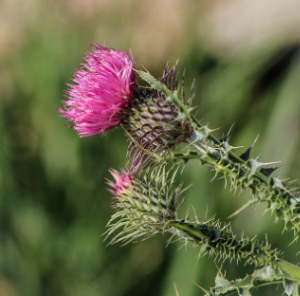 USES: Milk thistle (Silybum marianum) supports liver health and may help prevent or manage certain liver disorders. Its active compounds—collectively called silymarin—have antioxidant, anti-inflammatory, and cell-protective properties that concentrate in the liver. Evidence and traditional use indicate potential benefits for conditions such as cirrhosis, chronic hepatitis, and fatty liver disease, and for reducing jaundice-related symptoms by supporting liver function and bile flow.
Key actions:
- Antioxidant and anti-inflammatory: Silymarin helps neutralize free radicals and reduce inflammatory damage to liver cells.
- Hepatoprotective and restorative: It may protect liver cells from toxins and support regeneration of damaged tissue.
- Detoxification support: Milk thistle can stimulate liver detoxification pathways, aiding removal of metabolic and environmental toxins.
- Digestive and circulatory support: By improving bile production and liver function, it can enhance digestion and overall eliminative processes.
- Galactagogue effect: Some evidence and traditional use suggest milk thistle can increase milk production in nursing mothers.
Usage considerations:
- Milk thistle is often used as a complementary therapy, not a standalone cure.
- Quality, dosage, and formulation vary; standardized silymarin extracts are common in studies.
- Possible interactions exist with certain medications (e.g., those metabolized by liver enzymes).
- Pregnant or breastfeeding people, and anyone with serious liver disease, should consult a healthcare provider before use.
CONTRADICTIONS: milk thistle is considered a safe herb that can complement most health practices and formulas, as the reports of toxicity and side effects are few and limited to mild laxative effects in some individuals DOSAGES: Tea Tincture: 20-40 drops three times per day