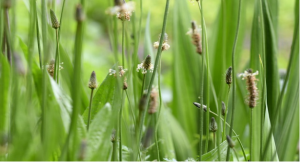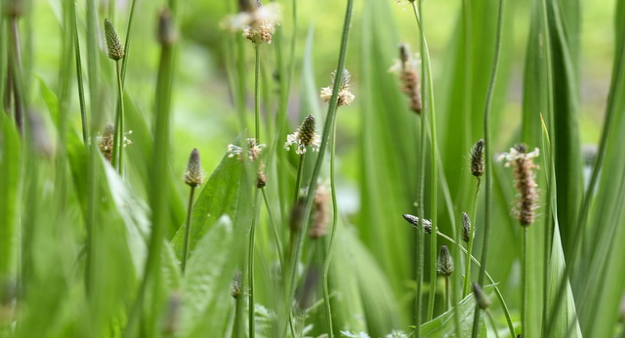
COMMON NAME: PLANTAIN, English plantain, Englishman’s foot, white man’s footsteps, ribwort, ripplegrass, waybread, snakeweed 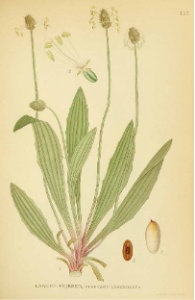
LATIN NAME: Plantago spp. (esp. P. lanceolata and P. major)
FAMILY: Plantaginaceae
PARTS USED: Leaves, roots, seeds
REGIONS: Worldwide
SYSTEM AFFECTED: digestive, immune
HARVESTING GUIDELINES: Don’t harvest in areas where the soil may be contaminated or the plant may have been exposed to herbicides or pesticides. The young leaves may be harvested in spring or early summer as food. The leaves are often harvested and used fresh as needed for first-aid throughout the growing season. The leaves may also be harvested and preserved for later use by freezing or drying.
PLANT CONSTITUENTS: Allantoin, mucilage (polysaccharides), iridoid glycosides (including aucubin and catalpol), flavonoids (apigenin, luteolin), minerals (including significant zinc and potassium), and tannin
ACTIONS: Alterative, Anodyne, Anthelmintic, Anti-bacterial, Anti-cancer, Anti-candidal, Antidote, Anti-inflammatory, Anti-microbial. Antiseptic, Antitussive, Astringent, Decongestant, Demulcent, Depurative, Deobstruent, Diuretic, Emollient, Expectorant, Febrifuge, Hemostatic, Immunomodulant, Immune Stimulant, Laxative, Ophthalmic, Spasmolytic, Vermifuge, Vulnerary
TASTE: Bitter, Sweet, Salty
ENERGY: Cooling
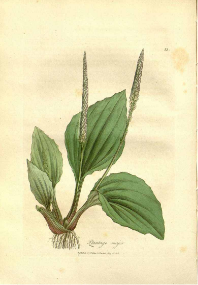
USES:Plantain (Plantago spp.) has a range of traditional and research-supported uses. It contains compounds such as aucubin, caffeic acid, and mucilage that have anti-inflammatory, antimicrobial, antioxidant, and demulcent (soothing) effects. Uses and applications:
- Immune support: Traditionally used to support immune response; some constituents have antimicrobial and anti-inflammatory activity.
- Digestive health: The mucilage soothes irritated mucous membranes and may relieve symptoms of ulcerative colitis, irritable bowel syndrome, gastritis, diarrhea, dysentery, and constipation. Animal and preliminary human studies suggest benefit for inflammatory bowel conditions and ulcer healing.
- Anticancer/antimicrobial claims: Plantain has been investigated for antimicrobial effects and, in some preliminary studies, for anticancer activity. Evidence for efficacy against breast or colon cancer in humans is limited and not conclusive.
- Oral and topical use for infections: Traditionally used for thrush and other surface infections; topical plantain preparations are applied to cuts, wounds, insect bites, and burns to reduce inflammation and support healing.
- Respiratory conditions: As a demulcent and mild expectorant/antitussive, plantain tea or syrup can soothe inflamed airways and ease cough, congestion, bronchitis, and laryngitis, and may help loosen sticky phlegm.
- Smoking support: Leaf tea or tincture is sometimes used to reduce smoking urges and to support respiratory cleansing.
- Allergies: Plantain has reported antihistamine and anti-inflammatory effects and is used traditionally for hay fever and allergic rhinitis.
CONTRADICTIONS: Plantain is generally recognized as safe, although caution may be advisable with diuretic medications. Evidence quality varies; most human data are limited. Avoid relying on plantain as a sole treatment for serious conditions (e.g., cancer, severe infections). Check for interactions, allergic reactions, and consult a healthcare professional before use, especially during pregnancy, breastfeeding, or when taking other medications.
DOSAGES: Infusion: Steep 1.4 g of herb in boiled water for 10 to 15 minutes, and take three times daily
Tincture: 1:5 (g/ml): 7 ml, three to four times daily.
Topical: The fresh leaves may be macerated by chewing or crushing and applied directly to the skin. A cold infusion can be prepared to use as a rinse, gargle, compress, or wash. Soak 1.4 g cut herb in 150 ml cold water for 1 to 2 hours, stirring often, and apply three to four times daily.
Succus: Juice the fresh leaves and blend with an equal amount of honey. Store in a cool place and take 1 tsp as needed for coughs, or 1-3 tsp daily for stomach ulcers. Seeds: The seeds and husks can be used whole, or ground in a coffee grinder before use. Use 1 tsp, one- three times daily